Off-Grid vs Hybrid Solar: Which System Is Right for You?
Off-Grid vs Hybrid Solar: Which System Is Right for You?
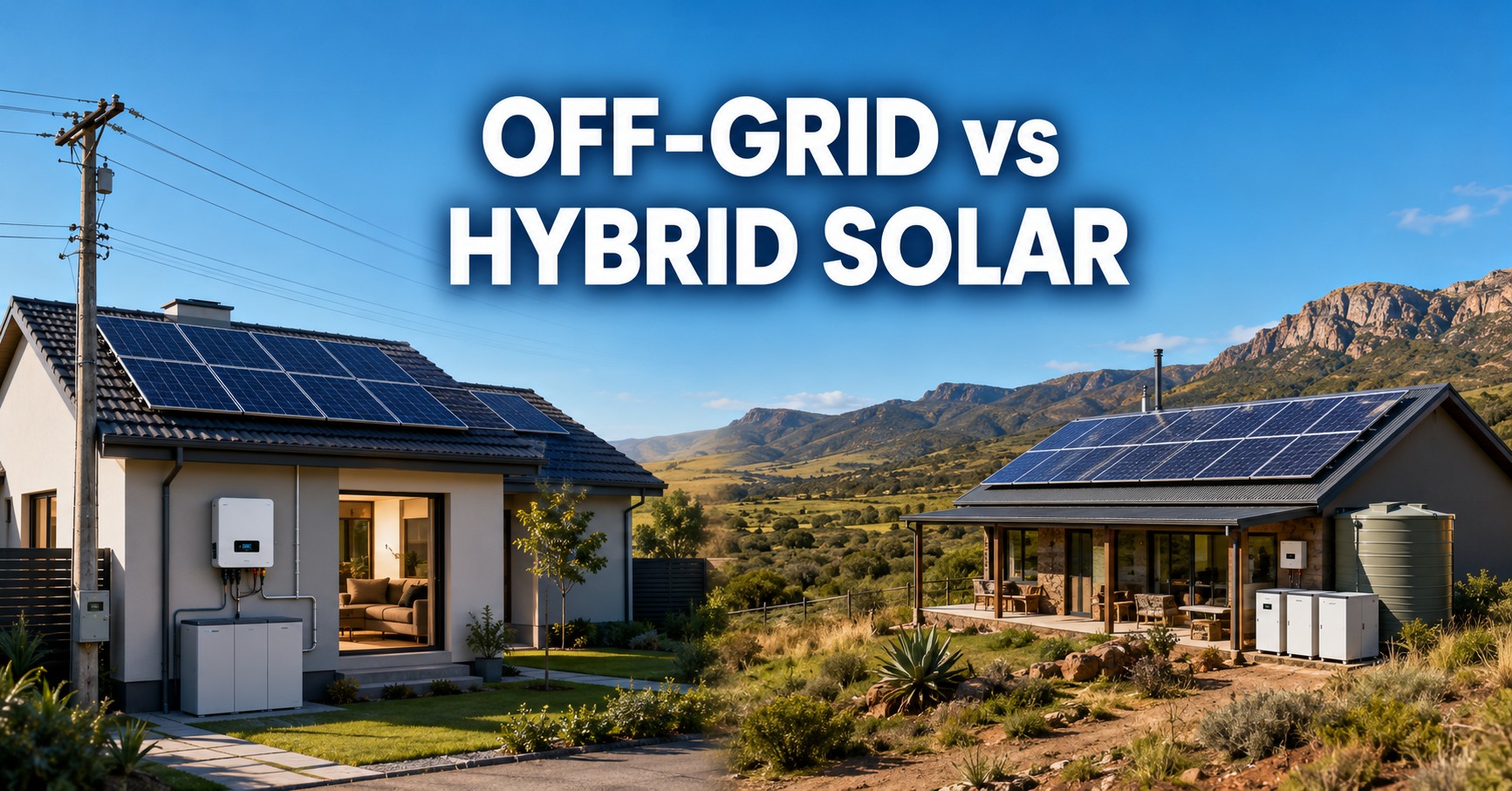
Choosing a solar system involves more than selecting an inverter and battery. One of the first decisions is whether your property needs an off-grid or hybrid solar system.
Although both systems use solar panels and batteries, they manage electricity differently. Understanding the difference will help you choose a system that suits your property, budget and long-term energy goals.
What Is a Hybrid Solar System?
A hybrid solar system combines solar panels, battery storage and the electricity grid. The inverter automatically manages power from these sources according to the selected settings.
During the day, solar energy can power the property and charge the batteries. When solar production is insufficient, the system can draw power from the batteries or the grid.
A true grid-interactive hybrid inverter may also support zero-export control or export excess solar energy to the grid, subject to municipal approval and local regulations.
A hybrid system is suitable for customers who want to:
- Reduce their monthly electricity costs
- Have battery backup during power interruptions
- Continue using Eskom or municipal power when necessary
- Manage solar, battery, grid and generator power intelligently
- Expand their system as their energy requirements increase
Hybrid systems are commonly used in homes, businesses, farms and commercial properties that still have an available grid connection.
What Is an Off-Grid Solar System?
An off-grid solar system is designed to operate independently from the electricity grid. It normally relies on solar panels, battery storage and, where necessary, a generator.
Some off-grid inverters can accept Eskom or generator power as a backup source and use it to supply loads or charge the batteries. However, this does not make them true grid-interactive hybrid inverters.
Off-grid inverters generally cannot feed excess solar electricity back into the grid.
An off-grid system may be suitable for:
- Farms and remote properties without grid access
- Lodges and developments far from existing electrical infrastructure
- Properties where a new grid connection is too expensive
- Customers seeking greater energy independence
- Agricultural and commercial applications with reliable generator backup
The Main Differences
A hybrid system is designed to work with the grid, while an off-grid system is designed to operate without depending on it.
Hybrid systems can use the grid when solar and battery power are insufficient. Off-grid systems must have enough solar generation and battery capacity to support the property through poor weather, winter conditions and periods of high electricity demand.
For this reason, a properly designed off-grid system often requires:
- A larger solar-panel array
- More battery storage
- Careful management of high-consumption appliances
- Generator backup for extended periods of poor weather
- A detailed assessment of daily and peak electricity usage
Which System Is More Affordable?
A hybrid system is generally more affordable because the grid remains available as a backup. This can reduce the amount of battery storage required.
A fully off-grid system usually costs more because it must generate and store enough energy to operate reliably without grid support. Designing an off-grid system too small may result in depleted batteries, generator dependence and insufficient power during winter.
The cheapest system is therefore not always the best investment. The correct system is one that can safely and reliably support the customer’s actual energy requirements.
Why a Load Assessment Is Important
An inverter’s kilowatt rating does not tell the complete story. A professional assessment should consider:
- Average daily electricity consumption
- Maximum simultaneous demand
- Single-phase or three-phase supply
- Geysers, ovens and electric stoves
- Borehole, pool and irrigation pumps
- Air conditioners and heating equipment
- Motor and compressor starting requirements
- Available roof or ground-mounting space
- Required backup duration
- Future expansion plans
Roof type, orientation and available installation space must also be assessed before the final system is specified and quoted.
Let RSA Solar Supplier Help You Choose
RSA Solar Supplier provides carefully selected solar solutions for residential, commercial and agricultural applications.
We can help you determine whether a hybrid or off-grid system is best suited to your property and prepare a solution based on your electricity usage, essential loads, roof layout and budget.
Contact us for a professional solar assessment and installation quotation.
RSA Solar Supplier (Pty) Ltd
Website: www.solarsupplier.co.za
Email: sales@solarsupplier.co.za
Telephone: 081 729 5101 / 065 008 2530